Garage Floor Consultation: Prepare for a Polished Concrete Discussion
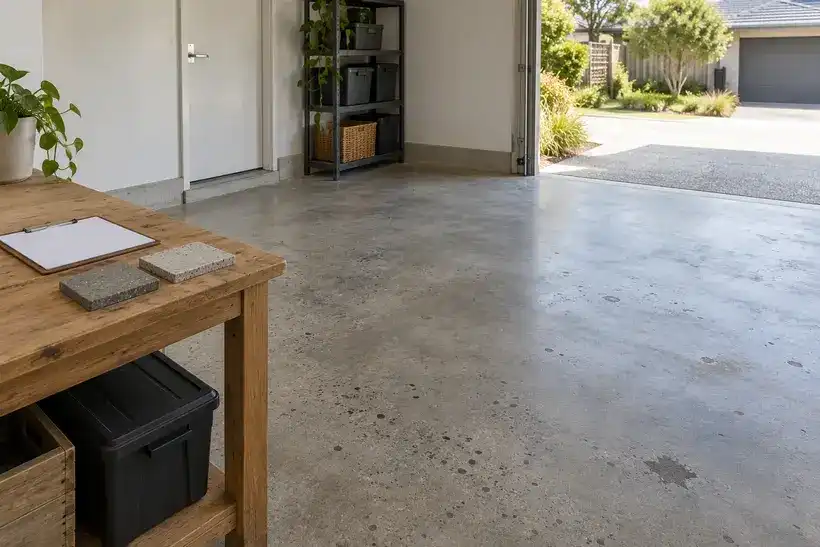
A garage floor consultation is the place to discuss what the existing concrete can support, how you intend to use the space and which finish expectations need assessment. Begin with a clear account of the garage as it stands. A reference photograph can express a preference, but it should not become a promise about your own floor.
Before asking for a finished appearance or a work date, organise the information a contractor will need. Record the areas involved, the belongings that occupy them and any previous floor work you know about. Keep uncertain details visible so they can be investigated rather than guessed.
If your preparation notes include 'sell motorcycle' as a task, separate that decision from the flooring appointment. Confirm any vehicle collection directly and explain whether it will happen before the assessment or proposed work. A future empty garage is a plan until the belongings have actually left.
Explain how the garage will be used
Describe the current use and the use you are considering after the project. Parking, household storage and a work area create different questions to discuss. Avoid choosing the finish solely from a photograph of a room that serves a different purpose.
Tell the contractor about the activities relevant to the floor. You might store tools beside a parked vehicle, move household items through the garage or use only part of the space regularly. The aim is to provide context for assessment, not to decide which system will suit those activities yourself.
Distinguish a confirmed change of use from an idea. If you are considering a workshop but have not decided what it involves, say so. The contractor can explain what additional information would be needed before that idea becomes part of the project scope.
Include areas you want excluded. A floor request may cover the main garage while leaving a separate storage room or an external approach outside the job. Describe those boundaries so a quotation can be compared against the same intended area.
Record observations about the existing floor
Write down visible marks, previous coatings or repairs you know about. Use ordinary descriptions and indicate their locations. 'A dark mark beside the former parking position' is more useful than an unverified diagnosis of what has entered the concrete.
The Brooks Floor Covering discussion of slab condition explains why existing conditions belong in the expectations conversation. For your garage, ask the contractor to assess what is present and what it means for the proposed work. Do not assume that a condition described in another property applies to yours.
If you have records of earlier floor treatments or repairs, make them available through the contractor's agreed channel. Mark anything you cannot verify. A remembered product name is not the same as a confirmed specification, and it should not silently become the basis of the assessment.
Photographs can help explain the enquiry when the contractor accepts them. Include an overall view and the particular areas you want discussed. Review the images for private paperwork or unrelated personal belongings before sharing them. The floor is the subject of the enquiry.
Use finish references as questions
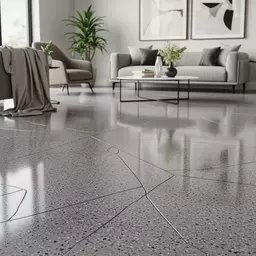
Choose a small number of references and say what attracts you to each. It might be the apparent sheen, the colour impression or the amount of visible aggregate. Those are different preferences, and a broad request for 'that look' can leave them confused.
Our article on selecting polished concrete finishes offers further reading for that conversation. Ask the contractor to explain the proposed finish in terms you understand and how it relates to the existing slab. Keep photographs as discussion aids rather than exact colour or texture guarantees.
View any available reference under conditions that help you understand it. Ask what the example can and cannot demonstrate about your garage. A small sample, a completed project and an online image provide different kinds of information; none should be treated as a complete description of an unassessed floor.
Record the preferences in the consultation notes and leave the achievable result for assessment. This keeps the brief honest while allowing you to explain the appearance you would like to explore.
Ask how assessment and trial work will be handled
Ask the contractor what inspection, testing or trial preparation they consider appropriate before defining the finish. Let them explain the purpose and limits of the proposed assessment. Do not prescribe a grinding process or begin preparing a test area yourself on the strength of a general guide.
The Diamond Shine guide to questions for a concrete polisher discusses samples, finish descriptions, exclusions and timing. Those are useful categories for a consultation. Its specific practices and market details describe that company and location, so confirm the approach proposed for your garage.
Clarify what happens if the assessment reveals a condition that changes the scope. Ask when the contractor would stop for a decision and how additional work would be explained. Keep that process in the written proposal rather than waiting until an unexpected condition becomes an argument.
Where a question requires another specialist, ask who should assess it before the flooring work is settled. An enquiry about appearance should not be expected to resolve every structural, water or building-use issue associated with the space.
Separate collection and storage from floor preparation
List the items that will remain during the initial assessment and those intended to leave before work. A motorcycle, a fixed cabinet and loose boxes create different coordination questions. Tell the contractor what is actually present and ask what needs to be accessible at each stage.
If another provider is collecting a vehicle, confirm the location, access requirements and agreed date with that provider. Pass relevant confirmed details to the contractor where they affect the flooring sequence. Avoid making either appointment depend on an assumed promise from the other party.
Plan where retained belongings will go while the area is unavailable. Ask the contractor what they require before work begins and what they will handle, if anything. Do not assume that moving stored equipment is included because the quote covers the floor beneath it.
Our guide to preparing a site for concrete flooring provides broader preparation context. Use the contractor's project-specific instructions for the actual work, including any restrictions on access or use during the process.
Make inclusions and exclusions readable
Ask for a scope that identifies the areas, the proposed finish and the preparation or repairs included. If a term is unfamiliar, have it explained before comparing proposals. Two quotations headed 'polished concrete' may still be describing different work.
Clarify how edges, transitions and areas beside fixed items are treated in the proposal. You do not need to choose the technical method to ask whether an area is included. Mark anything unresolved so it is not mistaken for a finished decision.
Ask which existing conditions may remain visible and what expectation is being set for them. A useful answer describes the assessment and its limits. Avoid asking the contractor to agree to a flawless appearance simply because an online example looks uniform.
Our article on choosing a polished concrete contractor offers further reading on provider selection. For this garage, compare the actual scope, assumptions and decision process alongside the proposed result.
Discuss timing without borrowing a generic deadline
Ask how the proposed work fits around other activities at the property. A painting visit, cabinet installation or vehicle collection may affect the sequence. Give the contractor the relevant information and have the arrangement confirmed by the providers responsible for those tasks.
Keep the working period distinct from the point when the garage can return to each intended use. Ask specifically about pedestrian access, returning belongings and vehicle use where relevant. Obtain the contractor's instructions for the proposed system rather than choosing a return date from a general article.
Record who will provide the update if timing changes. If the household has arranged temporary storage or another appointment, explain that dependency early. The purpose is to make coordination practical, not to force every stage into an unconfirmed timetable.
Do not begin using the area because it looks finished. Follow the agreed handover and return-to-use instructions. Appearance alone does not answer the question of when a particular activity is appropriate for the work completed.
A fictional consultation brief
Imagine a homeowner considering a polished finish for an existing garage. A motorcycle and storage boxes occupy part of the floor, and the homeowner has saved a photograph of a light, even finish. They do not know whether the concrete has previously been treated.
Their revised brief describes the intended parking and storage use, the visible marks and the unknown treatment history. The reference image is labelled as an appearance preference. They ask the contractor what assessment is needed before an achievable finish can be described.
The motorcycle collection is still being arranged, so it is shown as pending. The contractor explains what access is needed for the consultation and what would need to be cleared before any agreed work. The homeowner keeps the collection, storage and floor decisions as separate tasks with a clear sequence.
This fictional example is not a report of a completed floor or a guarantee of suitability. It illustrates how accurate inputs can improve the discussion before anyone commits to a finish or timetable.
Leave with a useful record for the next stage
After the consultation, note the agreed next action, the information still required and the scope that has actually been confirmed. Keep recommendations separate from accepted work. If a proposal changes, retain the current version so the household and contractor are discussing the same job.
Ask what care information will be provided at handover and who should answer later questions about the finished surface. Keep product and maintenance instructions tied to the actual system rather than a generic promise of easy care.
A garage floor consultation is most useful when it connects the existing slab, the intended use and realistic expectations. Describe what is there, explain what you want to explore and let the assessment inform the next decision. A considered brief gives the flooring conversation a firmer starting point than a photograph and an assumed completion date.